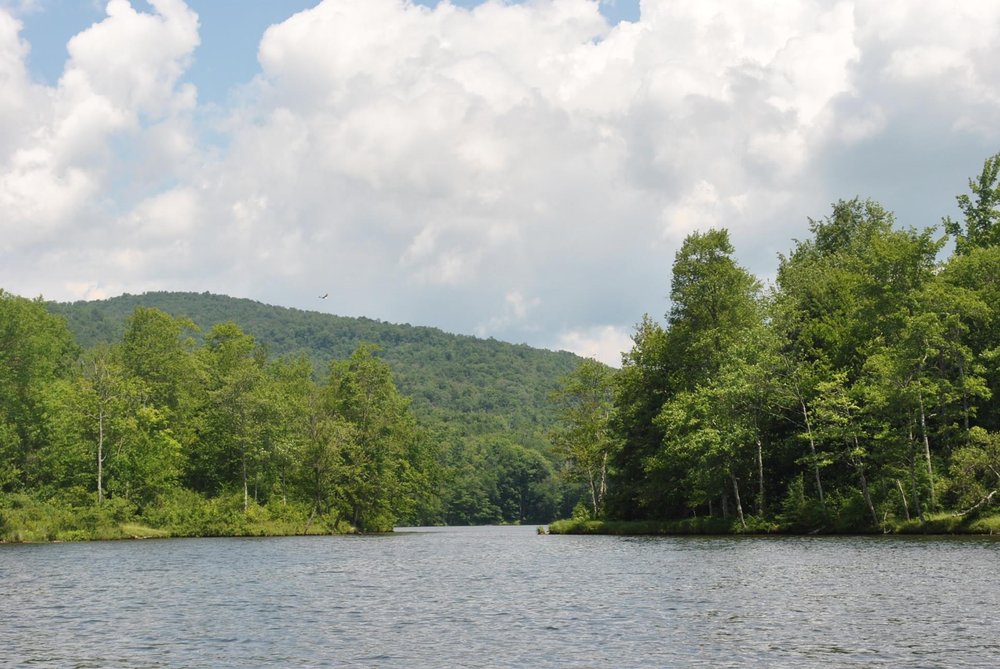
The Adirondacks, 135 years later…

A boy and his canoe

A boy and his canoe

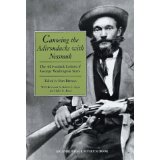
Recently back from a canoe camping trip to the Adirondacks, I spent some time thinking about how different our trip was from the canoe trips described by George Washington Sears (he died in 1890) who wrote about his paddling adventures around the Adirondack lakes in the magazine Forest and Stream magazine, which was published from 1873 to 1930. Reports on three of his trips when he was in his early sixties were published as a book in 1962 and reprinted in 1993 as a more critical edition titled Canoeing the Adirondacks with Nessmuk: the collected letters of George Washington Sears. Sears, who wrote under a pen name, Nessmuk, the name of his Indian friend, which means wood drake, a type of duck, in the Algonquin language, preferred light weight camping. And, he paddled what by today’s standards would be considered an ultra light weight canoe, weighing less than 15 pounds, and only about 10 feet in length.

51RM8PGEHTL._AA160_Sears also eschewed packing a large ‘duffle’ as he described it, criticizing tourists to the Adirondacks for overpacking and taking too much “stuff” into the woods.

But reading Nessmuk’s accounts of the Adirondacks while we were in the Adirondacks, I came to understand what has changed, and what has not. And those differences say something not only about the 6 million acres that make up the Adirondacks but about us, as tourists of the great forests, as canoeists and most importantly, as human beings.

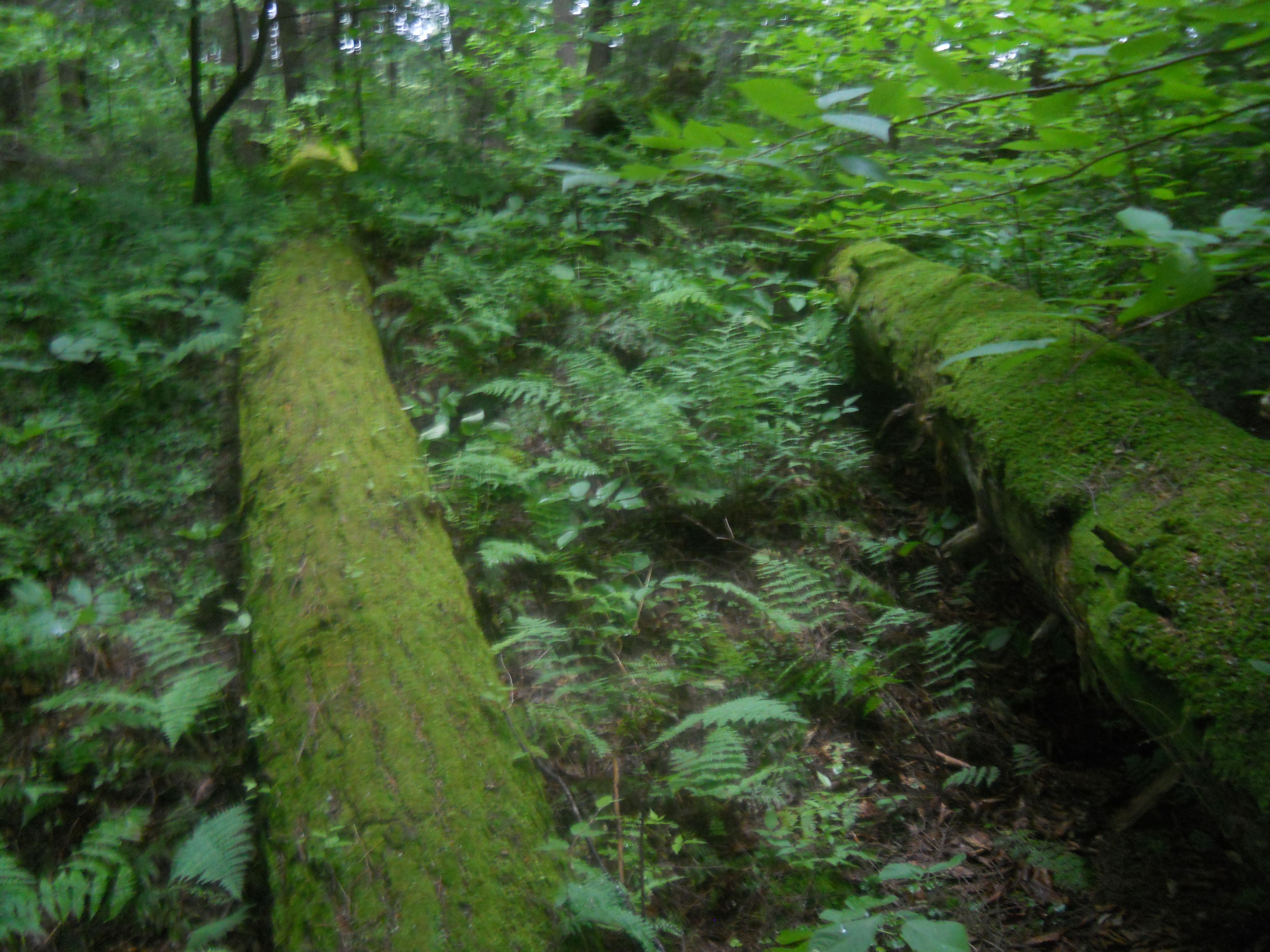
The Adirondacks were not even made a state park until 1892 and by then had been heavily logged for timber as well as for leather tanning. But when Sears plied the waters there were not yet restrictions on cutting down a tree to make a lean-to. Our trip to Follensby Clear Pond, between the Saranac Lakes and the St. Regis chain of lakes, restricted our camping to a designated camp site and also included a strict rule of using only “downed or dead timber” for camp fires.

Undisturbed moss covered trunks in Follensby area.

Undisturbed moss covered trunks in Follensby area.

Nessmuk was a master woodsman, skilled in the art of bushcraft. He was able to create a shelter with the aide of his ax and able to provide food either from fishing or with the muzzle of his rifle. In his light weight canoe, though, he tended to rely on fishing, since hooks, line and a pole weighed precious little.

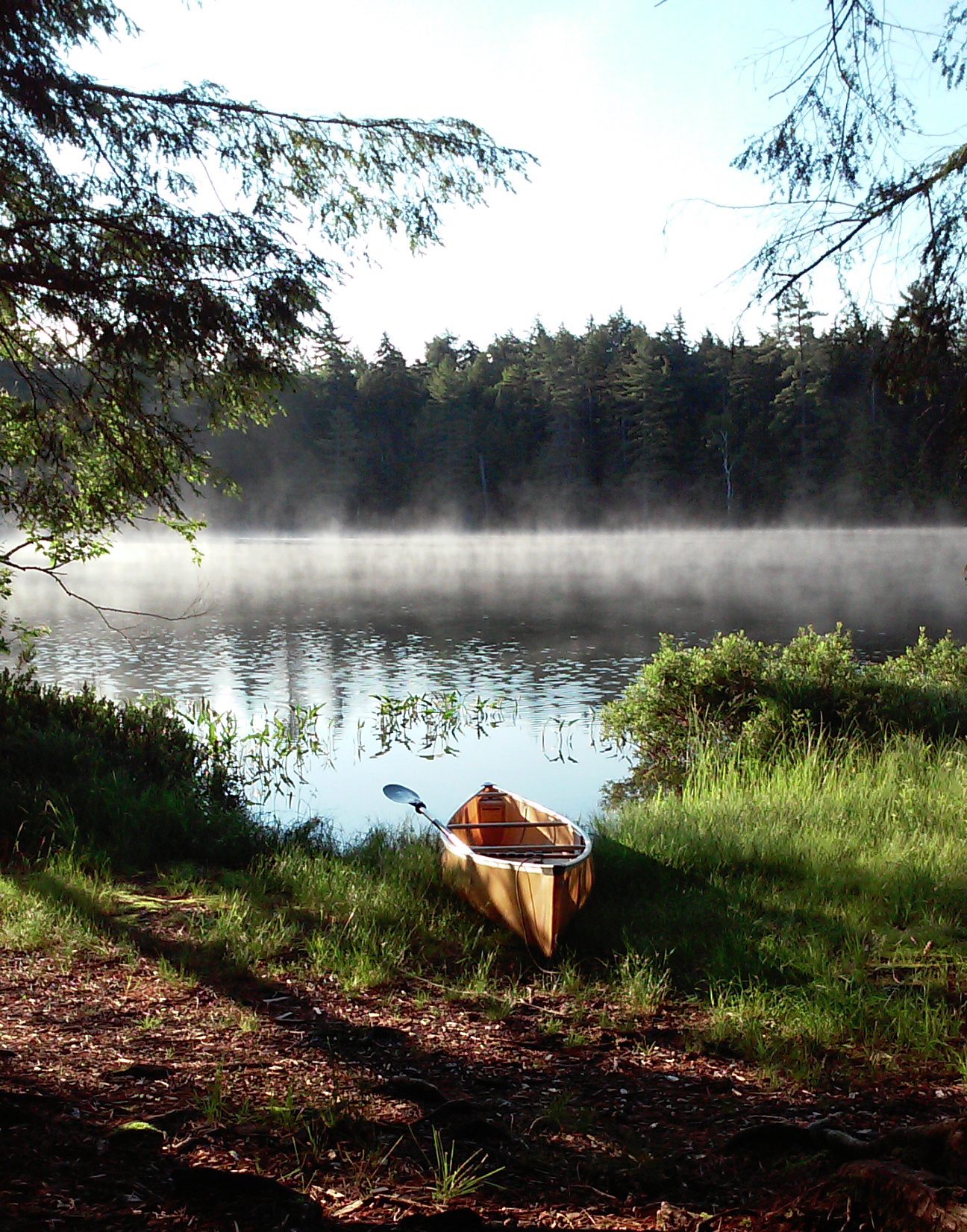
As I surveyed our own camp site with its three tents, kitchen and two canoes, I could not help but be wistful for a simpler time. We, like the tourists Sears criticized, traveled to the forests of the Adirondacks to enjoy a nature experience and to simply get away, in a way that traveling to a hotel or resort could not provide. Nonetheless, our ability to immerse ourselves on an island in the middle of Follensby Clear Pond surrounded by quite possibly virgin forest, hemlock and pine trees towering about 100 feet over us deep in the depths of the Adirondack State Park, was totally enabled by modern technology.

Follensby Clear Pond. Early morning.

Follensby Clear Pond. Early morning.

First of all, we drove there, covering almost 300 miles in about five and a half hours. Our tents were made of synthetic materials with aluminum poles that collapsed but were held together themselves with elastic threading. Our boats were plastic, one even made from ultra light weight Kevlar material. We cooked aided by a canister of compressed gas, burning iso-butane fuel and we stretched a blue plastic tarp over our cooking space to shield the wind and rain. 2014-06-29 17.35.47True, we did make a camp fire twice a day and did our best to start the fire with one match or two after gathering tinder and kindling. But, at one point, frustrated with my inabilities at keeping the fire going, I doused the wood with hand sanitizer and watched the flames reawaken and dance merrily. And all three of us smiled when we realized that we had cell phone reception on our island campsite in the middle of the wilderness, even if the reception was spotty at times.

So was our trip a true nature experience? We did endure some of the privations that Nessmuk described, such as mosquitoes. But we reached for our store bought insect repellent. Sears created and publicized the recipe for his own insect repellent concoction, cooking a mixture consisting of castor oil, tar and pennyroyal and applied it liberally to the skin with instructions to his readers not to wash it off themselves until they were out of the woods. And, like Sears, we did carry our canoes and all our gear from one lake to the next, but in our case, wishing we had less to carry. But one area where our misery probably equaled his was canoeing in the rain, becoming thoroughly soaked, a scene he described frequently (we either were late in donning rain jackets, or, they did not provide complete rain protection).

In Sear’s day, tourists hired guides to row them in heavy wooden dorries, carry the boats from lake to lake over the trails and set up camp and prepare food. The tourists did crave a wilderness experience. If they didn’t, they could have remained back at the great camp lodge, with many of the conveniences a home provided in the late 1800s. Nonetheless, he criticized them for taking too much stuff with them. Sears himself traveled with a very light weight pack, weighing less than about 15 pounds he writes, although some question the accuracy of his estimate. His pack consisted of an extra shirt and pair of socks, a blanket for sleeping, a knife and hatchet, fishing tackle and pole, homemade insect repellent, and a few other items. He probably carried some food with him but also relied on fishing and hunting. He took no tent as he made his own shelter from trees, trunks and branches.

We did not over pack but could have packed lighter. But even if we packed lighter, we could still not have done without modern technology. Sears never wrote about water purification. And, while some will argue that the waters of the Adirondack lakes do not require sterilization, being children of modernity, we erred on the side of caution and used an ultra violet light Steri-pen device. Furthermore, we could not have found enough appropriately sized ‘downed or dead’ wood to make our own shelter even if we wanted to and fortunately, with the rain we experienced, we had solid rain proof shelters. We could have tried to cook only with a campfire, but would first have had to master the art of creating reliable camp fires.

The Adirondacks have changed since the time of George Washington Sears. Now a New York State Park, the land comes with rules and regulations. But we, as people, have fundamentally changed in our increasing dependence on more and more advanced technology. This is not an indictment of modern society. Man has always craved, even depended on, better and better methods for producing food, shelter, and simply surviving.

kevlar canoe, ready to row. (Y. Friedman 2015)

kevlar canoe, ready to row. (Y. Friedman 2015)

I do not think that one has to have experienced the measles to appreciate the measles vaccine, or, develop frostbite to appreciate warm winter socks and gloves. And having been cold and wet, I can tick that wilderness experience off of my list. Yet, on the whole, I would still argue that when we enter the wilderness but temper our backcountry privations with the tools of modernity, we risk losing something intangible and irreplaceable. Our experience begins to approach a virtual experience. The food is the same, the shelter is clearly a modern machination even if we sleep in a sleeping bag on the ground, and even our mode of transportation feels high tech, sitting in an ultra light weight canoe made of space age plastic.

Zeroing in on an authentic and satisfying nature experience that includes modern technologies is truly a balance. Our early hominin ancestors embraced new technologies at every opportunity even if it was only a better stone tool. The American Indians eventually embraced the rifle and the horse when they came into contact with these new tools. And we continue to upgrade from a pen and ink to a fountain pen to a ball point pen to a typewriter to a word processor to a desk top computer to a lap top to a smart phone. But isn’t part of the reason for diving back into nature to leave most of that, or at least some of those modern trappings, behind?

Maybe yes, maybe no. Each person has her or his own reason for leaving their warm bed and 120 volt electrical outlets and stepping under the forest canopy of tall trees, big sky and a seemingly never ending ceiling of twinkling stars. But even then, when we gaze toward the celestial heavens, we have to wonder, are we looking at a timeless star’s ancient light, or is that sparkling star just the orbiting international space station reflecting the light of the sun.

Howard E. Friedman

-30-

H is for Hawk – rediscovering humanity

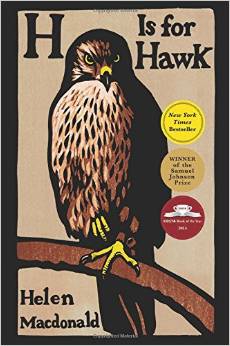
jpegI have only another 20-30 minutes or so until I turn the final page of “H is for Hawk”, the acclaimed prize-winning memoir by Helen Macdonald. And that thought makes me feel the way I do in the waning hours of a most rare soul-nourishing, mind-cleansing vacation. And it is not because Macdonald writes in detail about her interesting and unusual avocation of falconry and in particular, takes us on a journey as she acquires, trains and bonds with a goshawk, a fierce hunter of the forest floor. And it is not because she has such facility with words, making her prose so pleasurable to read it almost hurts.

Rather, “H is for Hawk” is so gripping and difficult to let go because in it the author shares the painful journey of healing from the depths of despair and loss after the unexpected death of her father.

“My vision blurs. We carry the lives we’ve imagined as we carry the lives we have, and sometimes a reckoning comes of the lives we have lost.”

Macdonald is certainly not the first to counterpose her personal grief and loss against the backdrop of raw nature. Cheryl Strayed wrote her memoir “Wild” about her attempt to heal her battered soul while she through-hiked the Pacific Crest Trail and that story was memorialized last year in a Hollywood movie. But while Strayed’s story was 2-dimensional, her angst and the trail, Macdonald’s writing takes the reader into four dimensions: the very painful loss of her father, the story of her experiences with her goshawk, the odd, sad and compelling story of author T.H. White (known for the children’s classics “The Sword In the Stone” and “The Once and Future King”) as detailed in his work “The Goshawk”, and the fourth dimension, time, as she takes the reader into the rich history of falconry through the ages.

Ms. Macdonald, a historian by education as well as a writer and poet, chronicles her experiences rearing and training a goshawk to hunt rabbits and pheasants, spending day after day with the bird, feeding it, weighing it, bonding with it and almost becoming it. The goshawk, affectionately dubbed Mabel, is not the first raptor that the author has trained. Fascinated by birds of prey since childhood, and with extensive experience working with and flying them, the author now decides in the wake of her father’s death to train one of the most challenging birds flown by falconers.  Goshawks have a reputation for being difficult to work with and their hunting style is different from other hawks as well; they fly low to the ground, preferring to hunt in the forest as opposed to the open field. That challenge is what she needs while she is in mourning.

But it is the loss of her father that Macdonald comes back to as she shares her feelings and her observations about losing and aloneness and temporality. And she contrasts those feelings against the inner life of the emotionally scarred T.H. White, an outsider and loner, and the life of her goshawk and its “conversation of death”, the unspoken communication between the hunter and the hunted:

“There is a time in life when you expect the world to be always full of new things. And then comes a day when you realise that is not how it will be at all. You see that life will become a thing made of holes. Absences. Losses. Things that were there and are no longer. And you realise, too, that you have to grow around and between the gaps, though you can put your hand out to where things were and feel that tense, shining dullness of the space where the memories are.”

Though her writing is often lyrical and a pleasure to read, Macdonald is so much more than a mere lyricist. She is a realist who can stomach talons in a rabbit’s head and she can snap its neck if needed to end the animal’s misery. And it is her acceptance of the brutality that exists in life in the wild that makes her more the clear-sighted naturalist than Emerson or Thoreau or John Muir. She is unapologetic about nature, which, while sublime, is, as Tennyson wrote,”red in tooth and claw.” The fog on the meadow in the early morning sun-rise and the blood and feathers among the grass and nettles after the kill. And it is all natural. Through her hawks, Macdonald eventually saw through the romanticized view of nature that casts all woods and streams and ferns and dales as a  balm for our suffering souls:

“Now I knew this for what it was: a beguiling but dangerous lie. I was furious with myself and my own unconscious certainty that this was the cure I needed. Hands are for other human hands to hold. They should not be reserved exclusively as perches for hawks. And the wild is not a panacea for the human soul; too much in the air can corrode it to nothing.”

Macdonald’s truths are difficult to hear for romantics like myself who have indeed looked to the woods as an escape. But ironically I have of late come to the same conclusion. It would be nice if the deep forest truly cared about us and could offer a consoling embrace, but a towering oak tree casting a cool shade under its leafy canopy on a steaming hot day would just as soon fall upon and crush me than shade me. Nature is implacable, reflecting back only what we bring into it, if that.

“H is for Hawk” tells a story we each are likely to confront at some point in our lives if we have not already. Without the hawk, though, leaving us to find comfort and solace and healing among our own species. A discovery and a story that Madonald tells so so well.

Howard E. Friedman

-30-